

A standardized pipeline that leaves the science to you.
From FASTQ upload to standardized delivery, spcfyBASE and spcfyINSIGHT cover the daily operating layer for labs and bioinformaticians alike. spcfyPREDICT and spcfAI extend what the same standardized data can do.
Working across both? Many labs run bioinformatics in-house, and many bioinformaticians work inside a lab rather than alongside one. Every feature on this page runs on the same standardized pipeline either way.
Your lab, your data. And full control.
spcfyBASE lets Labs streamline every step of the metabarcoding workflow, from order creation to preprocessing, quality control, and data delivery. Results stay standardized and reproducible, while your lab keeps full ownership and transparency over its data.
WorkflowOur spcfy workflow for labs
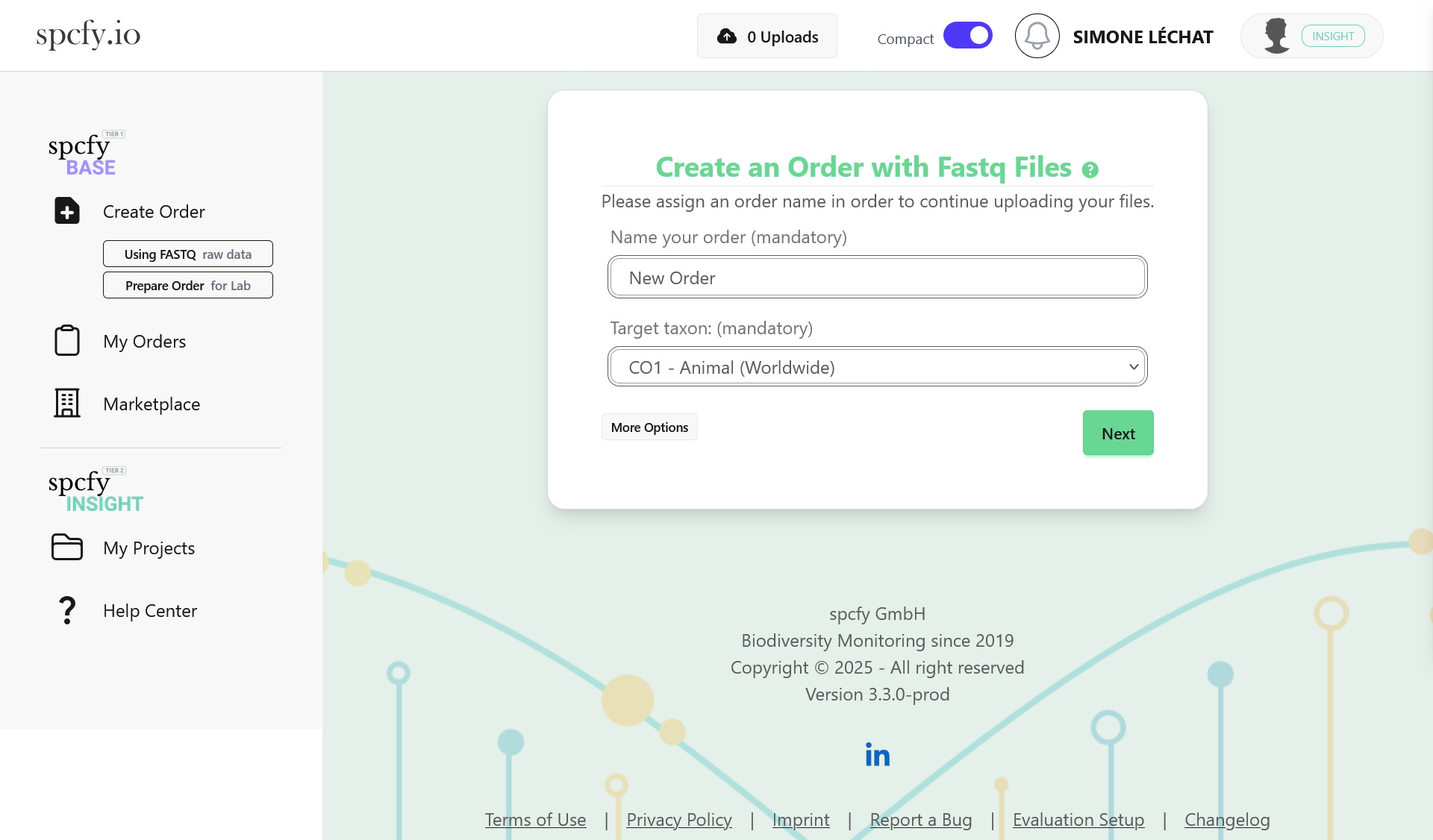
Create
Create analysis orders directly from FASTQ files using standardized amplicon pipelines and regional CO1 reference databases, for reproducible results and a faster turnaround from sequencing to analysis.
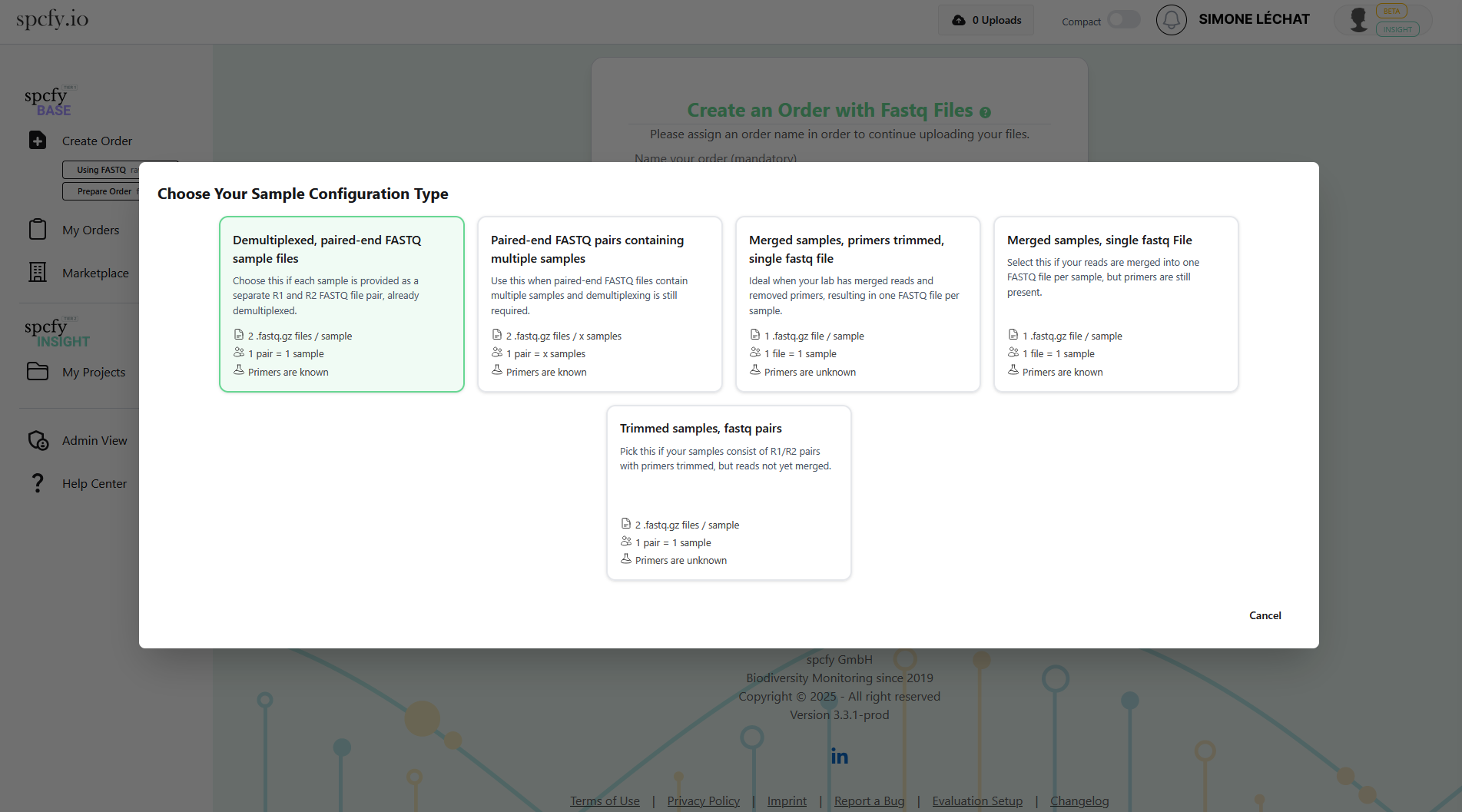
Prepare
Receive sequencing requests, access detailed metadata, and prepare preprocessing steps immediately after upload in one synchronized environment.
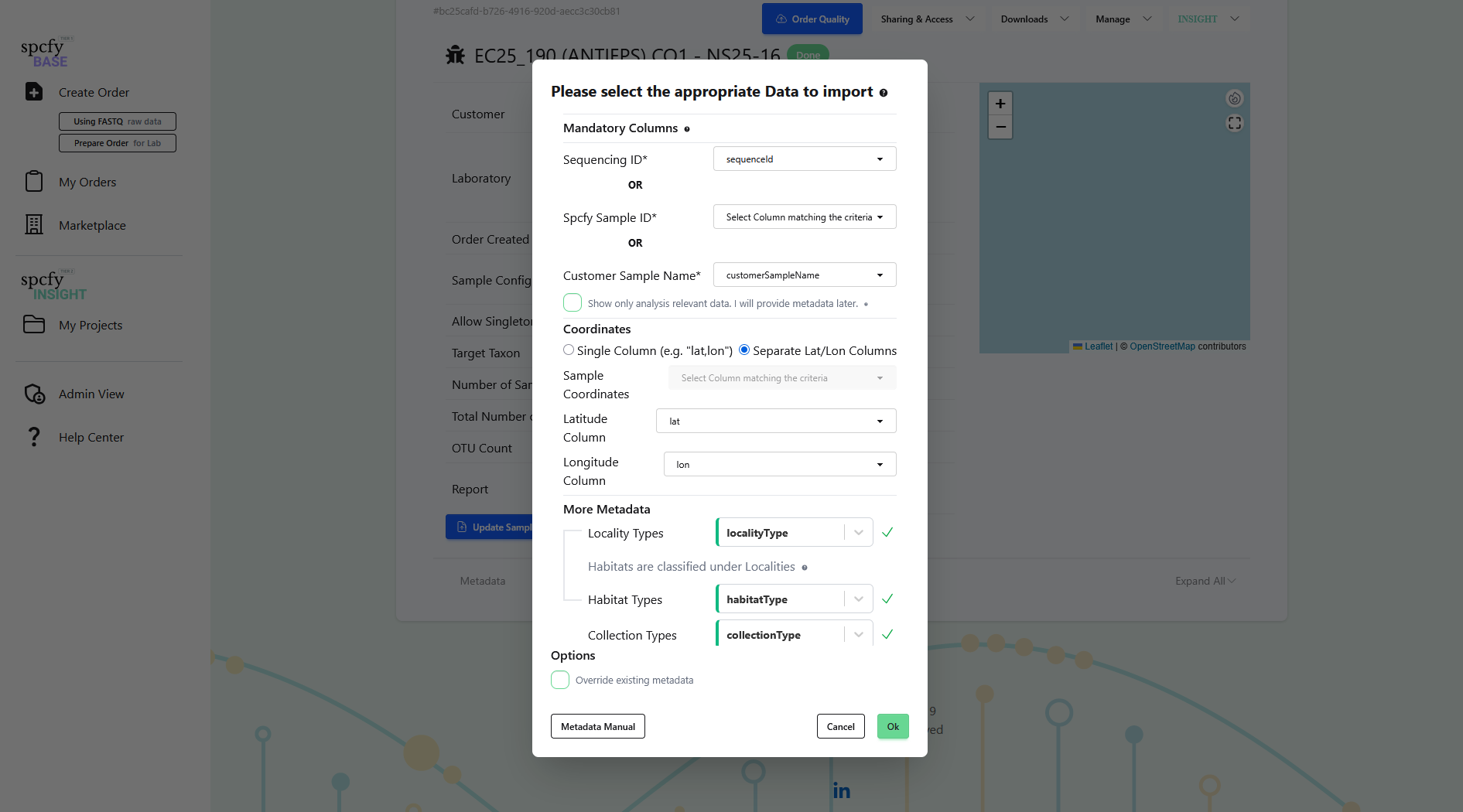
Process
Upload and validate FASTQ files, add metadata, and run instant QC checks. Automated status updates and comprehensive exports help deliver high quality datasets.
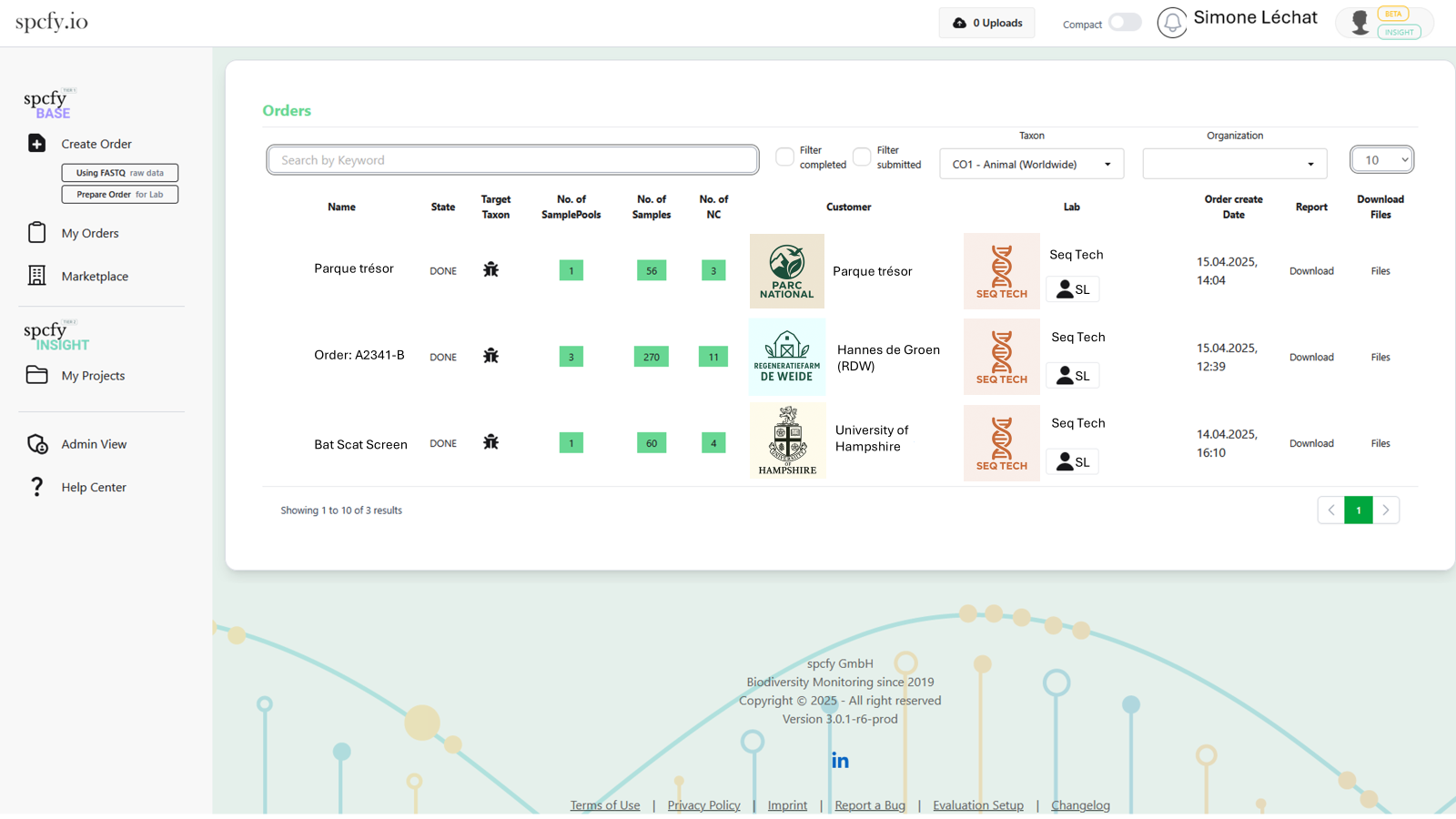
Manage
Keep track of active and historical projects with searchable overviews, filters, and progress tracking, and retrieve data quickly at every stage.
Join our network: the spcfy marketplace
Gain visibility in a global community of metabarcoding labs and customers, and find new customers and partnerships. The spcfy marketplace lets you present your lab to a growing network.

Skip the pipeline plumbing. Keep every parameter visible.
spcfy bridges raw sequencing data and high level analysis with standardized workflows and curated reference databases, removing the burden of pipeline maintenance and manual cleanup so you can focus on interpretation.
Less pipeline upkeep, more room for interpretation.
Standardized workflows for 16S, 12S, CO1, and ITS2, without manual script maintenance.
Access up to date reference libraries: NCBI, SILVA, BOLD, and UNITE.
Keep long term data consistent through unified OTU parameters across all projects.
Link wetlab metadata to results with full transparency on read counts and filtering.
A lot of what spcfyBASE and spcfyINSIGHT expose below is written for whoever configures a lab's pipeline, not just for the organization operating it. If that is you, these are the controls worth looking for as you read on:
Visualize and organize, with spcfyINSIGHT.
Move beyond static reports. spcfyINSIGHT turns biodiversity data into interactive charts, lets you track changes over time, and compare sites or projects side by side, so patterns stay visible and results stay easy to communicate.
Visualizations
Present biodiversity results clearly, with KRONA overviews, drill down charts, and OTU tables customers can explore, filter, and reuse, instead of static PDFs.

Projects
Build long running analytical workspaces that combine multiple orders: curate consistent pipelines, compare cohorts across time and sites, and collaborate with customers.
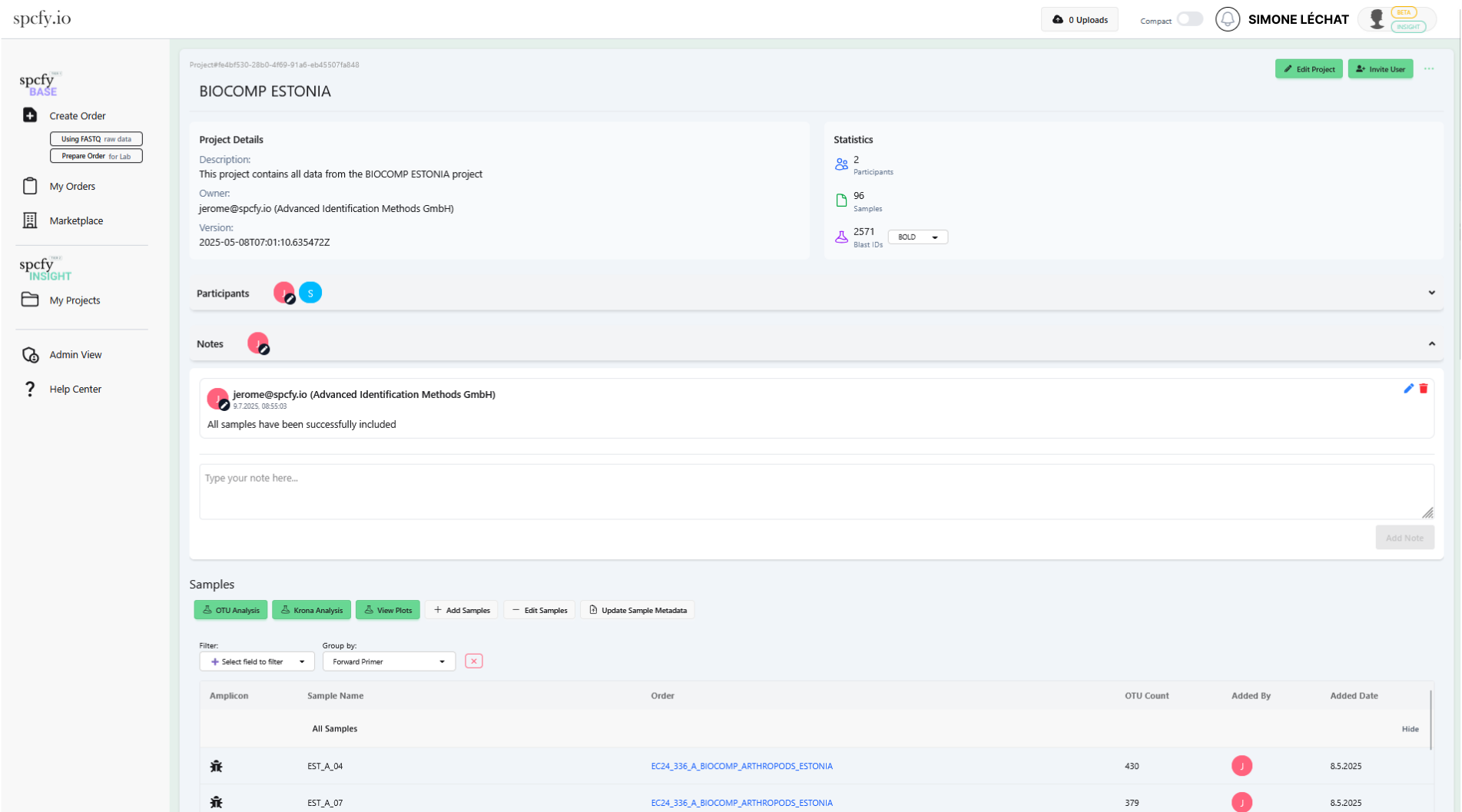
Two more stages, built on the same standardized data
spcfyBASE and spcfyINSIGHT are the core platform: the data foundation and the analysis layer your lab and its bioinformaticians use every day. Two more stages extend what the same standardized data can do.
Predictive layers and Nature KPIs, built on top of INSIGHT.
Will bring model-driven inference to your lab's standardized data: land-use classification, Nature KPI baselines, and risk scoring, so the results you deliver can go beyond raw taxonomy.
A natural-language interface for your biodiversity data.
Query pipeline outputs, QC results, and OTU data in plain language, or connect your own Claude or ChatGPT model through the spcfAI API for custom analysis scripts. Built for bioinformaticians who want programmatic access without maintaining their own infrastructure.
You are the producer side. Here is the full loop.
spcfy connects labs and bioinformaticians to the data users who depend on standardized biodiversity data. The same pipeline and QC context carry through from your upload to their results, so everything stays comparable end to end.
Also ordering data from other labs or reference sources, not just delivering it? See what data users get on the other side of spcfy.